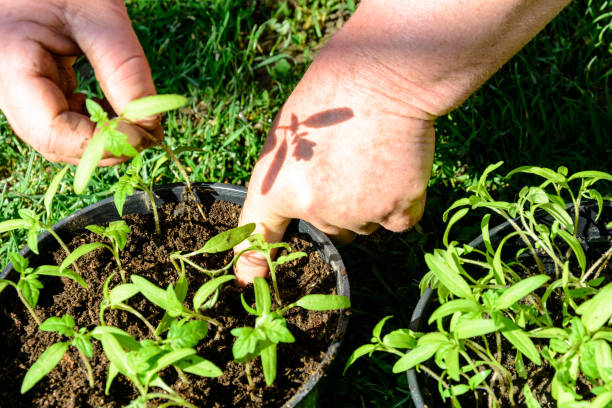
An elevated garden bed with legs makes working in your garden more straightforward and relaxing. It is possible to plant plants, flowers, as well as small vegetable plants at waist level in this 3′ by 2 feet raised garden bed, which provides plenty of space for lush garden soil. In addition, with the base made of landscape fabric and wire mesh, the perfect drainage is built within the plan.
What a Raised Garden Bed With Legs Is
A garden bed equipped with legs is reminiscent of a table composed of solid materials that grow the garden surface above the ground.
For most gardeners who live in homes, the garden bed will remain tiny, about three to six feet in length. The more extensive raised garden beds with legs can be constructed but are harder to move.
The most durable and long-lasting material used for garden beds that are raised is cedar. Cedar is attractive, cheap, simple to make cuts and drillings, and can weather naturally.
The length of the garden bed with legs is contingent on the gardener’s needs. For most people, placing the rails on top of your bed about waist level is recommended. For this particular project, the fence will be 30 inches tall.
Instructions
Cut the Wood
One-by-six cedar board, four sections measuring 36 inches in length each
One-by-six cedar boards, four teams of 24 inches in length each
One-by-four cedar boards, six sections, each 24 inches long each
Four-by-fours, four groups of 30 inches each
Preserve the Legs
Wearing latex gloves and the rags, apply dabs to the edges of the four-by-fours using the preservative copper. Allow to dry for an hour. If you bought cedar (not pressure treated) four-by-fours and they are not pressure-treated, they don’t need to be protected by this method.
Attach the Legs
The bed will be constructed with the bed upside down. Set four one-by-six cedar boards (two long and two short) along the edge of an even surface to create an oval. The shorter pieces should be placed at the edges. On the face of the board, you can screw the boards into the four-by-4s, putting the four-by-4s at the ends (not laid flat in the middle).
This is done on all four legs to ensure the legs are placed on the sideboards’ insides. After this step is completed, all four legs are connected to the outside of the rectangle formed by chests and are currently high in the air.
Attach the Rest of the Bed Sides
Make sure the bed is upside down. Like the previous rectangle, create a second rectangle made of one-by-six boards (long and shorter) over the last rectangle.
Put a longboard on top of the lower longboard, then put it in place with screws between the four-by-4s. Repeat the process for the other side. After that, put a shorter board on top of the shorter one, and then screw it in place on top of the four-by-4s. Repeat the process for the other side.
Measure the Hardware Cloth
Lay the cloth for the hardware on an even surface. Then, fold it in such a way that it isn’t curled upwards. With the assistance of an assistant, put the bed (still upside down) over the cloth. Leave 2 inches all around and draw a line across the fabric with an indestructible marker with an edge straight.
Add the Bottom Slats
When the bed is upside down, attach the six slats of the one-by-4 board to the bottom. For each slat, you will need two screws at each end. Each slat sits directly on the bottom edges of One-by-six-sided side boards.
Cut the Hardware Cloth
The garden bed must be removed and then turn it upside down. Use the tin snips cut along the lines you traced on the cloth for the hardware.
Add the Hardware Cloth
The hardware cloth should be placed in the middle of your tray. Push it upwards across all sides. Make a 1 to 2-inch cut by snipping in all corners of the fabric to aid each corner in forming 90-degree angles. Staple into place.
Roll Out and Cut the Landscape Fabric
When the bed is upright, stretch the landscape fabric lengthwise onto the garden bed tray. Be sure that an extra foot or two are located at the ends. Place the material in a central position. Cut the material from the roll using scissors.
Staple and Trim Excess Landscape Fabric
Place the fabric’s landscape across the sides and down the bottom of the tray. It is beneficial to have a helper to help you hold the cloth. Then, staple it to the top. Remove any fabric that extends over the mattress’s sides.
Add Soil to the Garden Bed
Take the garden dirtbags, cut them in half into pieces, and slowly add them to the tray of garden beds. Don’t add soil abruptly by the side, which could tip the bed. Then, spread each bag out before going to the next one.\